NORVIS records its first auroral spectra in Svalbard
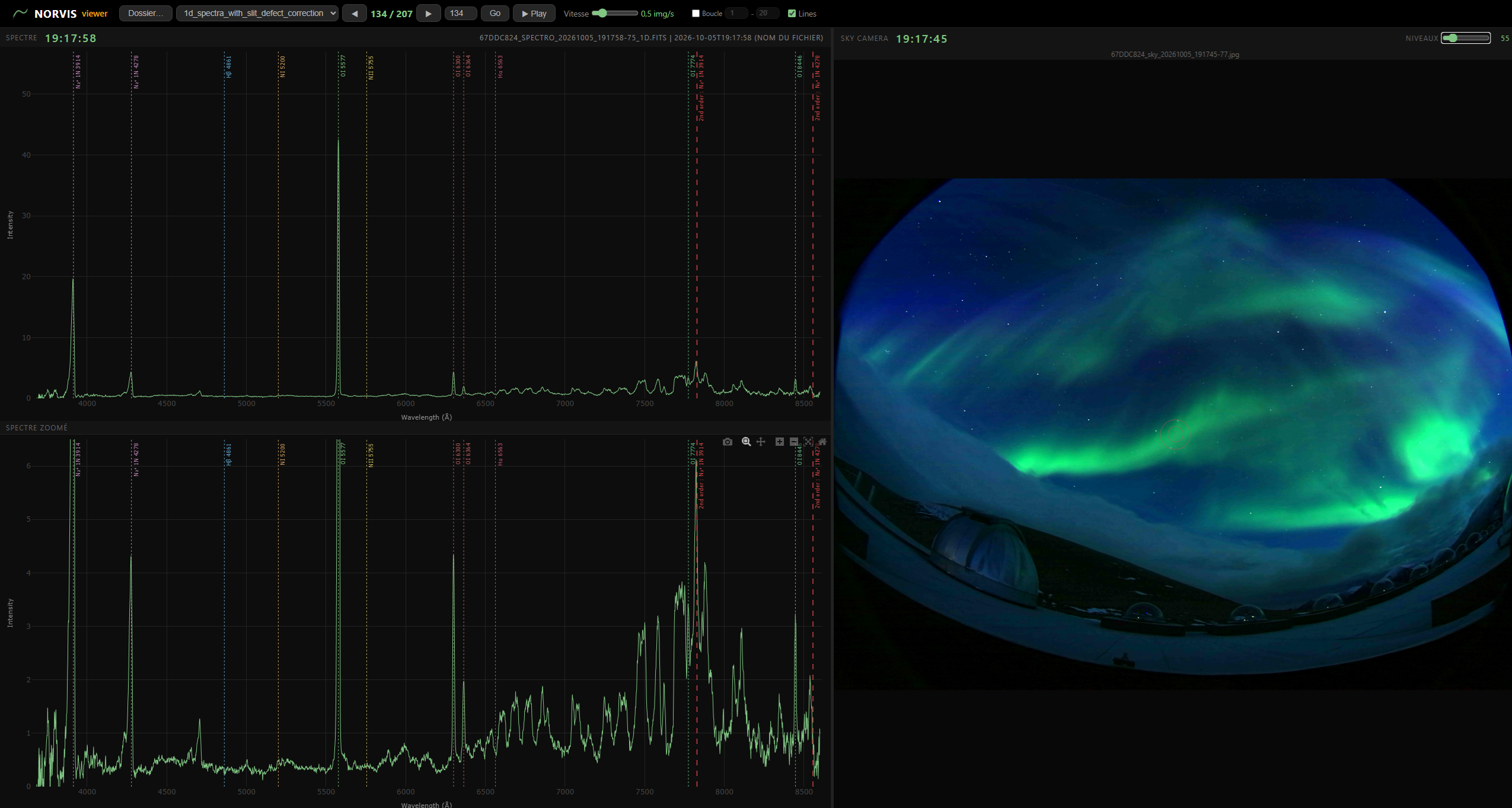
On 5 October 2026, NORVIS recorded its first auroral spectra at the Kjell Henriksen Observatory (KHO) in Svalbard, Norway. This first observation marks an important milestone in the development of NORVIS, a European network of auroral spectrographs initiated and coordinated by the Royal Belgian Institute for Space Aeronomy (BIRA-IASB), in collaboration with several scientific and amateur partners.
Analysing the light emitted by auroras
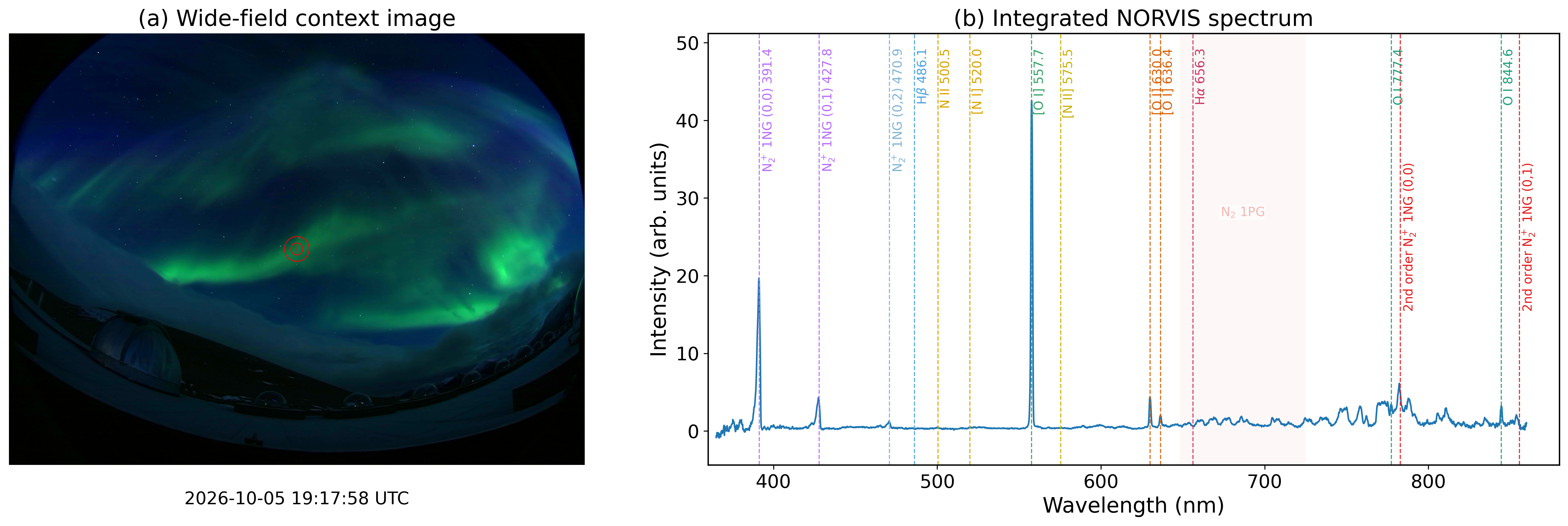
While photographing the northern lights is now accessible to a wide community of observers, analysing their spectra provides additional scientific information. This analysis makes it possible to identify the light emissions of different atoms and molecules in the upper atmosphere, particularly oxygen and nitrogen. By also studying the relative proportions of these emissions and combining them with physical models, scientists can obtain information about the energy of the electrons responsible for certain auroras. The first spectra recorded in Svalbard reveal several emissions characteristic of auroras, ranging from visible light to the near-infrared, and provide an opportunity to begin exploring the scientific capabilities of the instrument.
A European network led by BIRA-IASB, bringing researchers and amateurs together
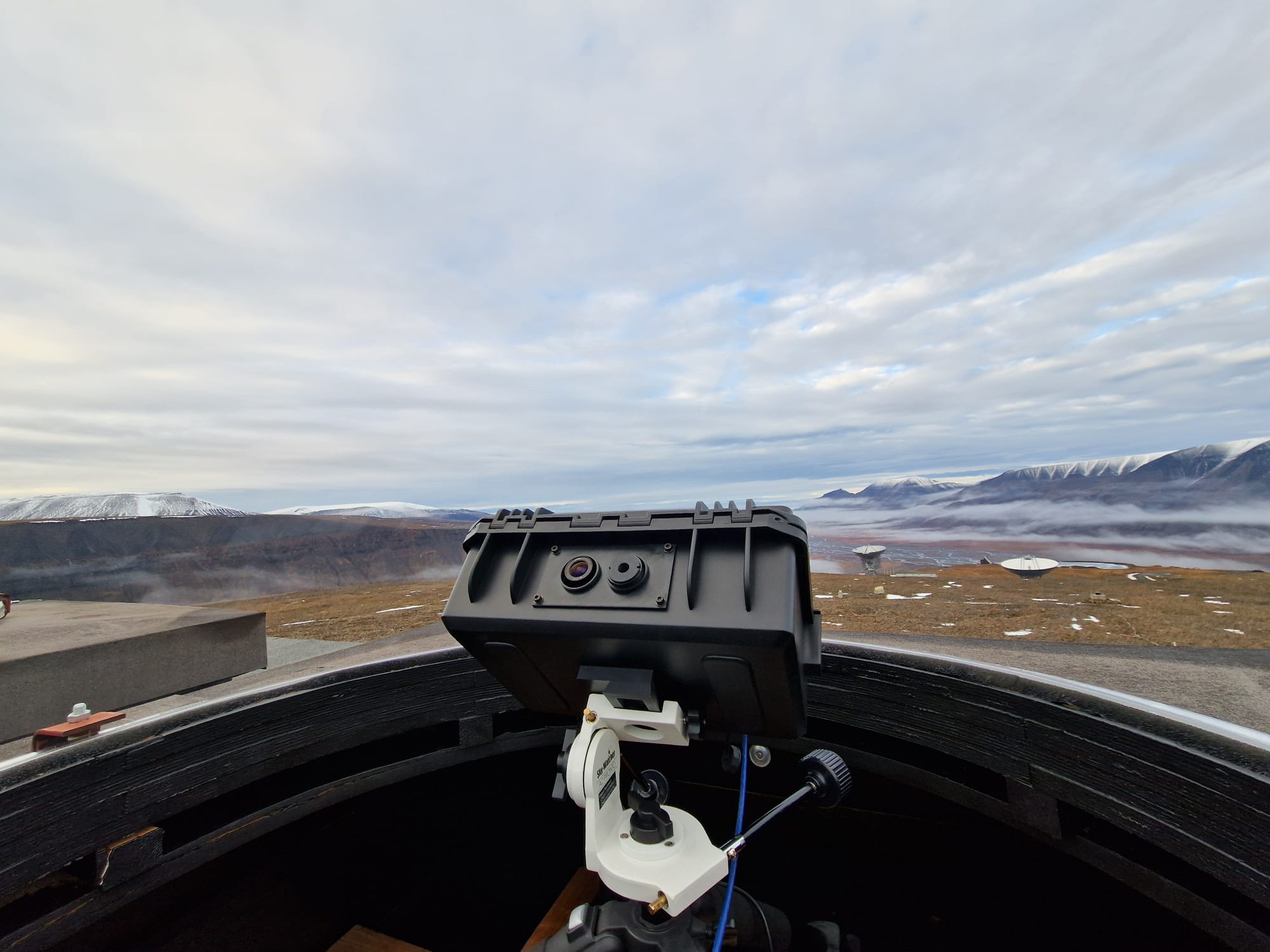
NORVIS (NORdlys Versatile Imaging Spectrograph) uses compact, portable and relatively low-cost spectrographs capable of simultaneously recording a broad range of auroral emissions.
BIRA-IASB is responsible for the scientific coordination of the project and the development of the European observation network, with the aim of expanding spectroscopic observations from different high-latitude sites. This approach will make it possible, among other things, to compare the properties of auroras observed in different regions.
The project also stands out for its close collaboration between professional researchers, instrument developers and amateur spectroscopists, who work together on instrument development and the acquisition of new scientific observations.
This first observation in Svalbard represents a step towards the wider deployment of the NORVIS network. Future observing campaigns will expand the available dataset and help deepen our understanding of the physical processes underlying auroras.
Find out more: norvis.aeronomie.be
News image 1
News image legend 1
News image 2
News image legend 2
Source: norvis.aeronomie.be
News image 3